
In the United States, July 4th is a day of celebration, and in many ways, it reaffirms America’s belief in its destiny, a “City on a Hill”. In Germany, if there is a day that is similar to America’s July 4th, that says as much about Germany as any other. Not the only things to be said about Germany, but a good deal. That day, infamous, notorious, nefarious, would be November 9th.
Working backward, November 9th was the day that the Wall separating communist East and free West Germany started to come down, and from those ruins, a stronger, united Germany rose. But whereas America’s July 4th has mostly positive connotations, Germany’s November 9th is its “Schicksalstag“, or Fateful Day, and is never celebrated.

History is the sum total of things that could have been avoided. –Konrad Adenauer
Any expat who lives in Munich will often conclude that there is a melancholic undertone lurking in nearly every German you meet. Deeply hidden in the recesses of their collective character, it best manifests itself in an abundance of skepticism, cynicism, or German angst.
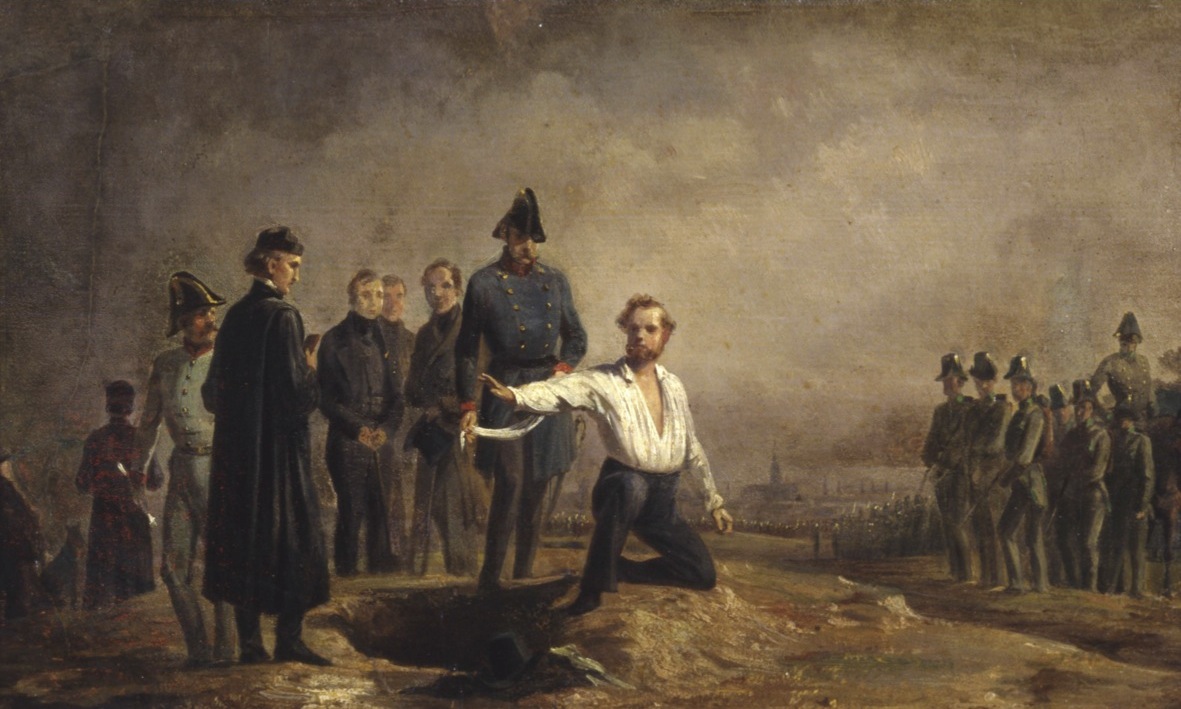
The contradiction that is Germany is summed up by its Fateful Day. Moments of darkness in its history are balanced with brilliant light. Though the idea for a unified Germany began earlier, the first real attempts can be traced to Vienna, where Robert Blum, a liberal leader of the German Revolutions of 1848, was executed on November 9th by Austrian soldiers. Blum and others believed that Germany should be separate and independent of the Austrian Empire. Though he became a martyr, his death effectively ended any hopes for a unified Germany at that time.
From that day in Vienna to exactly 70 years later, Philipp Scheidemann, an upper-ranking member of the Social Democratic Party of Germany (SPD), gave a speech to a large crowd of people from the Reichstag (Parliament Building). Though he was not qualified to do so, Scheidemann declared that Germany was now a republic, thwarting the efforts of the Communists to declare Germany a Soviet Republic. And so, Germany became a republic.
Three years later, the whole incident was captured in the novel Der 9. November by Bernhard Kellermann, which was critical of German soldiers during the Revolution of 1918. This brought him much trouble later.
It gets darker. In 1923, a former corporal from the Bavarian Army (part of the German Army) declared in a Munich beer hall that a revolution had begun in Germany. Adolf Hitler, a mostly heretofore unknown politician, led 2,000 followers in an attempt to take over the Bavarian Government and eventually to Berlin. That escapade started on the 8th, but ended on the 9th.

That escapade, ‘Beer Hall Putsch’, led to the death of 4 policemen and 15 Nazis (a waiter was killed by a stray bullet, becoming number 16). A plaque was erected by the Nazis after seizing power on the east side of the Feldherrnhalle (Field Marshal’s Hall), at Odeonsplatz. Citizens were required to give a Nazi salute when passing the plaque. To avoid giving the salute, many pedestrians coming from Marienplatz turned left on Viscardi Alle behind the Feldherrnhalle. It is known today as the Drückebergergasserl (Quitter’s/Shirker’s/Dodger’s Alley).
(A plaque commemorating the four fallen police officers was sunk at Odeonsplatz on November 9th, 1994. Few paid it much attention, so after much haggling between the city of Munich and the Bavarian State Government, a new plaque was attached to the west side of the Residenz.)

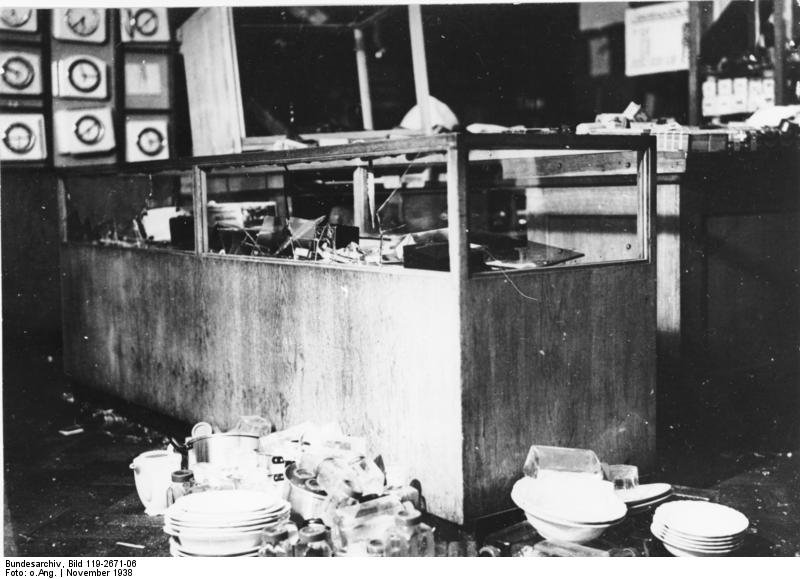
And then things went from bad to worse. On that fateful day in 1938, the rest of the world watched in horror as the Nazis showed their true colors. Goebbels’s announcement in Munich of “A spontaneous demonstration of German anger and scorn” was, in fact, well planned before. So began the rounding up of as many as 30,000 Jews and incarcerating them in concentration camps. Hundreds of Jews were killed. This is known as Kristallnacht (Night of the Broken Glass), due to the shards of broken glass that littered the streets.
The last event – and this may be the greatest of them all on this Fateful Day, somehow, was the fall of the Berlin Wall. After months of East Germans ‘travelling’ to Hungary and then crossing an open border from Hungary to the West, peaceful protests centered in Berlin began to demand free travel to the West. When it became clear that the Soviet Union would not send troops in support of the German Democratic Republic (GDR), the stage was set for opening the Wall.
It was decided on 9 November to open the crossings the next day, but the person who was to announce this was not told it was to be in 24 hours. Caught unawares, he instead said it was to be effective immediately. At 10:45 pm or so, the border guards opened the gates, and the East Germans poured through. They were met by equally ecstatic West Germans who greeted them with bubbly and flowers.

When it came time to assign a day of celebration for this event, it was decided that November 9th was too controversial. In order to avoid any controversy, Germany decided to celebrate their National Unity Day on October 3rd, the date when their reunification was finalized in 1990.
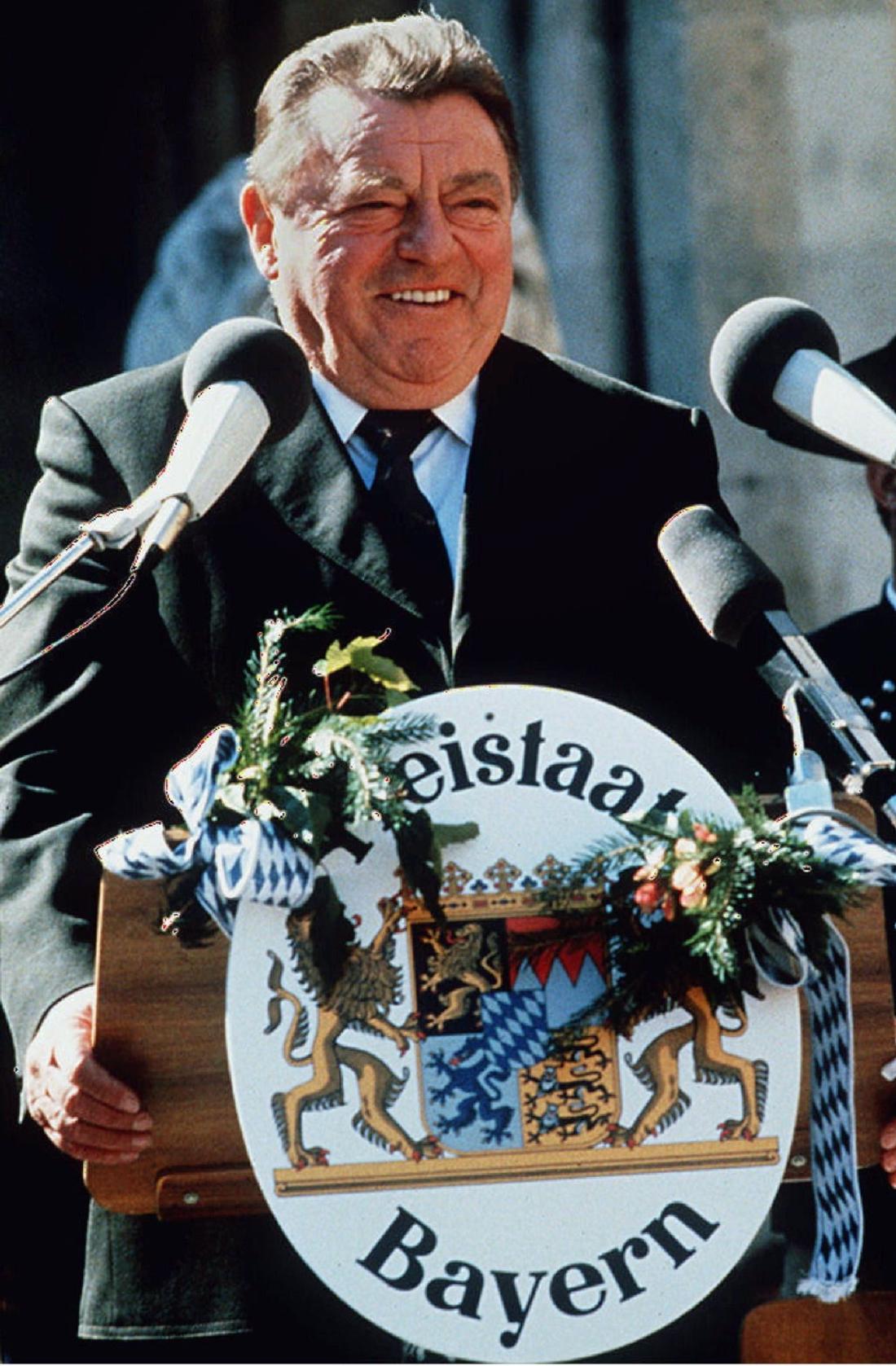
But as fate would have it, and in a country whose history is so long and full, there is no day completely free of sorrow. Bavaria’s most important politician since the end of the monarchy, Franz Josef Strauß, died on October 3rd, 1988, while hunting near Regensburg. Every Bavarian loves Franz Josef; perhaps it was a small consolation.


Reblogged this on lahikmajoe and commented:
Spent most of the weekend reading a seemingly endless number of articles in both German and English about the fall of the Berlin Wall a quarter of a century ago today.
While I might still write about it after digesting the data, here’s what Michael Owens had to say.
LikeLike
Reblogged this on Laptops And Lederhosen.
LikeLike